Monday, July 21, 2014

Ghost Town of Bennington

Bennington Cemetery
 

     Traveling from Altoona to Gallitzin, you can still see some remains of nearly 100 old coke furnaces that follow the road. The furnaces were part of a small operation that mined iron from the nearby valley. With the need for labor in the area the town of Bennington was founded in 1846. The town was at its peak during the construction of the Gallitzin tunnels and began as a shanty town to house the migrant workers. The Pennsylvania Railroad and the Blair Iron & Coal Company,later Cambria Iron Company, were the primary employers of the town and encouraged growth of the town. Life was especially hard during the winter and the town was only reachable by train during the winter months. The only road at that time, Sugar Run Road, was impassable in winter conditions. On February 18th, 1947 one of the largest train disasters took place on the Bennington Curve; the wreck of the Red Arrow. Over 20 people lost their lives and even more were injured. It was later found during an autopsy, that the engine-man was blind in one eye and did not see a train on the same track that was running late.
View Looking Towards Altoona

      All that remains of the town now is a small cemetery, a few remnants of mining, and coke furnaces. The cemetery is reachable by car. Take Rt. 22 to the Gallitzen exit then take the first right. Then take the 2nd left back an old forest road and then parallel to the train tracks. The cemetery is marked and it is a few yards up a hill from the parking area.

Tuesday, July 15, 2014

Royer Mansion & Cemetery

Royer Mansion
      Many small communities in the early 1800's had an iron furnace in Pennsylvania. The village of Royer was no different. Samuel Royer and his family, by which the town was named, settled a short distance south of Williamsburg PA on what is now Route 866.

      Their original home had accidentally burned down and the second home was built in 1815 which still stands today known as the Royer Mansion. Across the street from the mansion, the Springfield Furnace was built to smelt iron. descendents of the Royer family lived in the home up until the death of Carrie Hartman which was the wife of Samuel Royer's grandson. The house was later sold to the fish and game commission and then purchased by the Blair County Historical Society in 1984. The mansion is occupied by a Tennent in the upstairs who maintains the property. The downstairs of the mansion is like walking back in time with little changes from its original decor. Tours and various events are still held on the property to this day.

Spring House
      Besides being of historical interest, the Royer Mansion has acquired a paranormal interest as well. Stories are told of ghostly children laughing outside the adjacent spring house and apparitions seen in the windows of the mansion. One witnesses story even claims that the spirit of Carrie Hartman gave a tour of the mansion to unsuspecting tourist. They later called the Blair county historical society to praise how well the tour went. However, they found out that the tour guide had taken ill that day and no one from the society was on the property to give the tour they experienced.

      The Mansion is used throughout the year for local gatherings and events namely the Halloween ghost story tellings and haunted tours. To have a tour of the building simply contact the Blair County Historical Society.

      The ghost stories don't end with the mansion, the Royer Cemetery has a few as well. Royer Cemetery sits at the base of Lock Mountain between Williamsburg and Hollidaysburg. Stories have circulated about shadow people and mysterious lights seen through the cemetery. 
Royer Cemetery


Monday, July 7, 2014

The Bedford Coffee Pot


     Along the Lincoln highway/Rt. 30 many roadside attractions used to litter the side of the road. Many of the tourist traps that sat along American's first coast-to-coast highway have been torn down or are now privately owned. However, in Bedford one of the old attractions still stands. On the Bedford county fairgrounds a huge coffee pot sits just a few yards from the highway. The Coffee pot was originally owned by the Koontz family and operated as a service station. Through the years the building became unkempt and almost burnt down. The building was marked for demolition until a government grant was given to restore and move the coffee pot from its prior location to the county fair grounds. Today people can still stop and get a glimpse of the roadside giant at the entrance of the fair grounds.


Monday, June 23, 2014

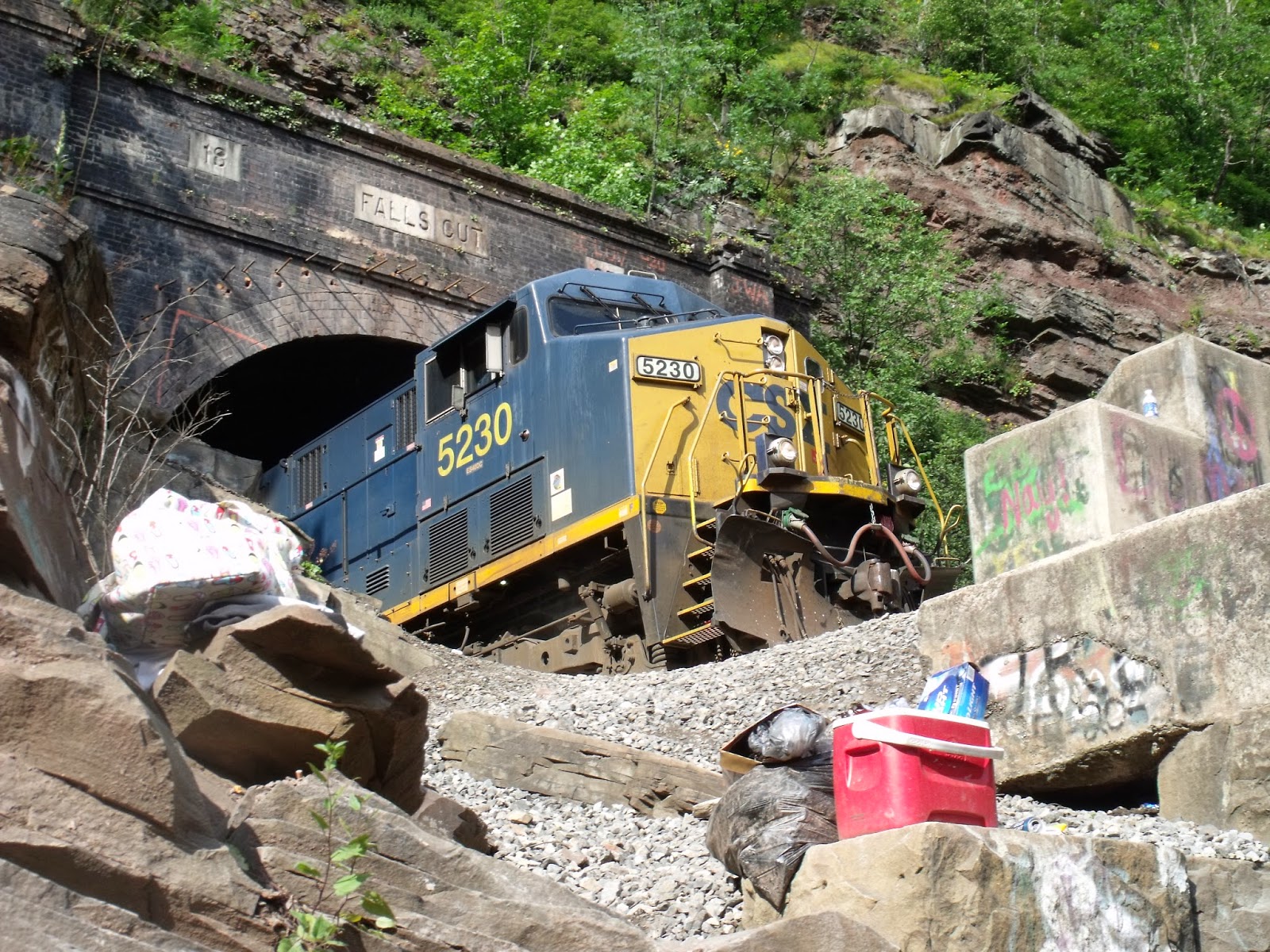
Falls Cut - Fair Hope PA

     
View of the Tunnel From Below the Tracks
     Growing up in a rural community in the summer there are plenty of things to do outside. One of my past times as a teenager was to go cliff jumping and swimming in the various quarries and lakes. In south-eastern Somerset County Pennsylvania, there is the small town of Fair Hope which is home
to a swimming hole. Fair Hope is mainly known, if at all, by its history of making bricks and being along the Historic B&O railroad. The town has been slowly fading away since the industrial revolution like many others in the rural parts of Pennsylvania.

      Just east of Fair Hope is a Tunnel called Falls Cut. The tunnel leads to a bridge that spans a swimming hole. The swimming hole has a nice formation of cliffs where locals and travelers like myself have gone to jump and swim in the water. Unfortunately when a few friends and I arrived it was like so many swimming holes, lined with graffiti with trash all around. It was fun however to climb the waterfall of rocks below the bridge and watch the trains pass overhead.

     Use extreme caution if you wish to visit this location. I do not recommended swimming or jumping from the cliffs.

Falls Cut Tunnel

Jumping Cliffs
Swimming Hole

Monday, June 16, 2014

Shade Church

 
Front of Shade Church

     It was more of an accident that I found Shade Church. I was actually in the area looking for Crum Cemetery, which I have blogged about earlier, and by chance came across this old church. I wrote down its location and as much information as I could then and set it aside for another time. While the weather broke for a brief period this past mid-winter, I decided to investigate into the place a little further. Brian, a friend of mine, and I packed up camera's and gear and set out to explore.

      I was unable to gather much information about Shade Church before we decided to investigate. From pictures of the front of the building I was able to tell it was a white boarded church built-in 1822 and had a cemetery across the road. Other than that, I was unable to find anything else about its history online. However, its paranormal history was more evident. Claims of ghostly apparitions dancing in the cemetery, caretakers of the church refusing to go back, and mysterious voices, sounds, and lights coming from within have made their way onto the internet.

A Look Inside
      Once we arrived to the church we parked along the road dividing the church and cemetery and started to examine the building from the outside. Stain-glass windows still remained around the building and the bell was still hanging in the tower. The building and cemetery seemed up kept. To our surprise we found the church doors open. We decided to respectfully venture further to take some photographs. Upon entering we were surprised to see all the pews in place, an alter with antique velvet chairs, a piano in the right corner and old wood burning stove. The interior was well maintained from what we could see. Only a little light came through the stain-glass leaving out vision poor. We both had an eerie feeling come over us at one point, but didn't witness any of the paranormal claims it held. Once we had our share of photos, we left the church both unexpectedly happy that we were able to enter the premises.

     On the way back home we talked and hoped to find out more history into the church and what community it once served. Hopefully we will get a chance to return when its warmer.
The Adjacent Cemetery

Monday, June 9, 2014

Frick's Lock


    Frick's Lock is a modern day ghost town located near Pottstown, PA. The land for Frick's Lock was acquired from a local farmer, John Frick, in the early 1800's. The village hosted 2 canal locks, #54 and #55, along the Schuylkill River. Like so many canal towns, it then adapted to host a railroad once the canals became obsolete. Frick's Lock would then meet its slow economic downfall after Conrail was formed in 1976.

     In the 1960's PECO, Philadelphia Electric Company, started to form a nuclear power plant across the Schuylkill river, and in 1986, before the station went online the residents of Frick's Lock had to move. Some say the residents were bought out and relocated, others say they were only given a 48 hour eviction notice. Either way, the homes were all boarded up and left standing stuck in time.

    Remains of about 10 buildings still stand in the ghost town. The oldest being a house from 1757, A barn from 1824, and the Lock tenders house built-in 1817. The property of Frick's Lock now belongs to PECO's successor the Exelon Corporation. Guided tours of the historic town occurred in 1997, 2000, 2002, and 2003. No other plans for tours have been arranged or made since.

    As of 2011, The East Conventry Twp. partnered with Exelon to preserve and protect the area. Plans to stabilized and rehabilitate the area are in progress. Due to his popularity as a ghost town, it has attracted many curious tourists and vandals. Vandalism hit its peak when arson was committed to one of the larger homes in Frick's Lock.The town can be reached by traveling about 4 miles south-east from Pottstown, PA on Rt. 724. The area is now patrolled by Exelon security staff and violators of trespassing can expect a hefty fine.

Tuesday, June 3, 2014

The Lost Children of the Alleghenys


      In April of 1856, Samuel Cox was having a string of bad luck hunting for food. This was not Samuel's first run with bad luck and it seemed to follow him and his family. Samuel and his wife were married in Johnstown Pennsylvania and soon headed west to the state of Indiana looking for prosperity. The Cox family grew to include two young boys, George and Joseph, but the family fell ill to malaria which was very prevalent in Indiana at the time. The family battled the sickness for months. Finally the family was well again and made a journey back to Pennsylvania to get away from the disease. The Cox family then settled in Spruce Hollow which is located a few miles from present day Pavia.

      On the foggy morning of April 24th 1856, Samuel again went out to hunt for his family. Again he came home short-handed and disheartened. While at home eating a meager meal, the family dog began to bark and run out of the house. Samuel jumped up with his gun and chased after the dog. Once Samuel caught up with the dog it had treed a squirrel. After getting the squirrel Samuel returned home to find his wife in tears and frantic. He had only been gone for an hour and a half but his two boys were missing. Mrs. Cox thought the boys had followed their dad. Samuel was unaware the boys had followed him and had greatly outran them in the fog. Samuel tried looking can calling for the boys all day without luck, and the fog just became heavier and heavier throughout the day.

      The Next day, a small band of searchers began looking for the two boys without luck. The search party grew over the next week to include over 1000 volunteers from 50 miles away who had heard the tragic story by word of mouth. The search was unfruitful, and rumors started to spread that Samuel and his wife had killed the boys. The accusations went so far, that the Cox family's floor boards were torn up looking for the boys.

      Neighbors of the Cox family started to implement other means to find the boys after their search had come up empty-handed. The belief in magic and witchcraft was very prevalent in the late 1800's. Many of the German pow-wow doctors, not to be confused with indian powwows, blended christianity with old world religion to heal the spirit as well at the body. A local man was said to have the ability to find anything by only using a peach tree limb in the shape of a “Y”. The man was known for finding underground water and lost objects. His search with the peach tree limb proved unsuccessful. The search party went as far as to send for the help of a known witch from Somerset county. She basically duped the men out of money and stumbled in the woods a few days and was unable to find the boys either.

      Things were looking very grim for the Cox family; however, a man eventually came forward with some information about the boys location. Jacob Dibert had a very vivid and weird dream the night after the boys disappearance. Jacob had no idea of the tragedy when he had his dream. While sleeping, Jacob dreamt that he wa walking a path through the woods when he came across a dead deer. Walking further he walked past a childs shoe, and eventually to a small bunch of fallen birch trees. Once he crossed over the tress, he saw two young boys huddled under a fallen tree in the ravine. Jacob had the dream the next two nights, then finally told his wife. After telling his wife, she told him to tell his brother-in-law Harrison Whysong. Harrison immediately recognised the details of the dream and knew of the boys disappearance. They went searching for the boys on May 8th 1856, following the clues of Jacobs dream and found the two boys dead in the ravine of starvation and exposure.

      Many have speculated that Jacob and Harrison had something to do with the deaths to know exactly where they were to be found. Others who are more open to the supernatural believe Jacob's dream was true. Jacob and Harrison were never prosecuted for the two boys death. In 1906, donations were collected to put up a memorial for the lost children's 50th anniversary. In 1910, a monument was raised and still stands today. Today the monument is in a roofed building in the ravine where the children were found and a plaque gives a brief history of the boys tragic story. The area is still rumored to be haunted by the two Cox boys. Many say you can still hear them crying and peaking around the trees.


 The Monument is located near Pavia PA. Turning off to Blue Knob Road, you will come to Monument Road. A short drive back will lead to a sign pointing the way to the monument and a parking area. The boys themselves are buried in Mt. Union Cemetery.


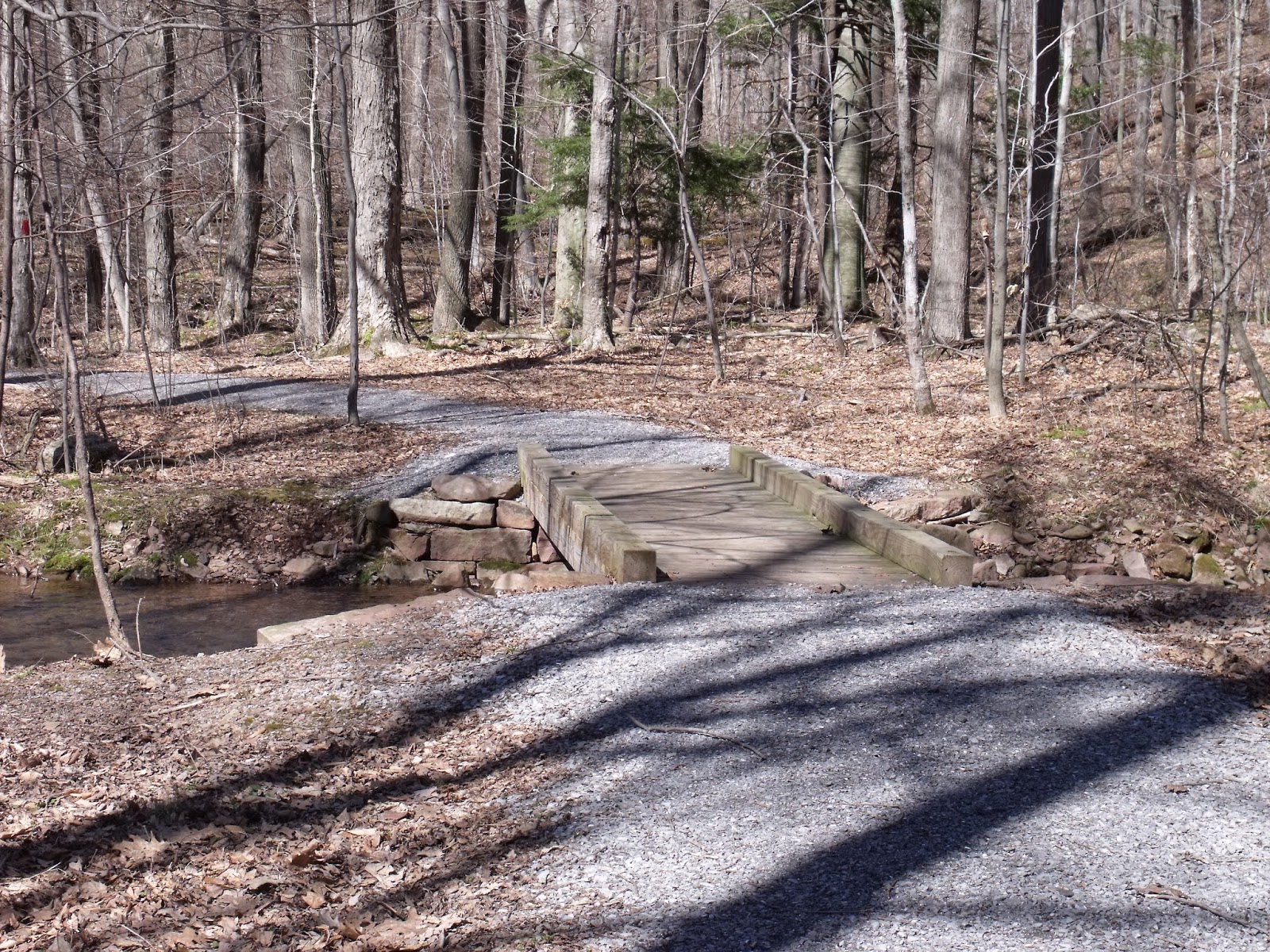
Path and Bridge Leading to the Cox Monument